
“Everyone has the right to seek and to enjoy in other countries asylum from persecution.”
Article 14 - Universal Declaration of Human Rights
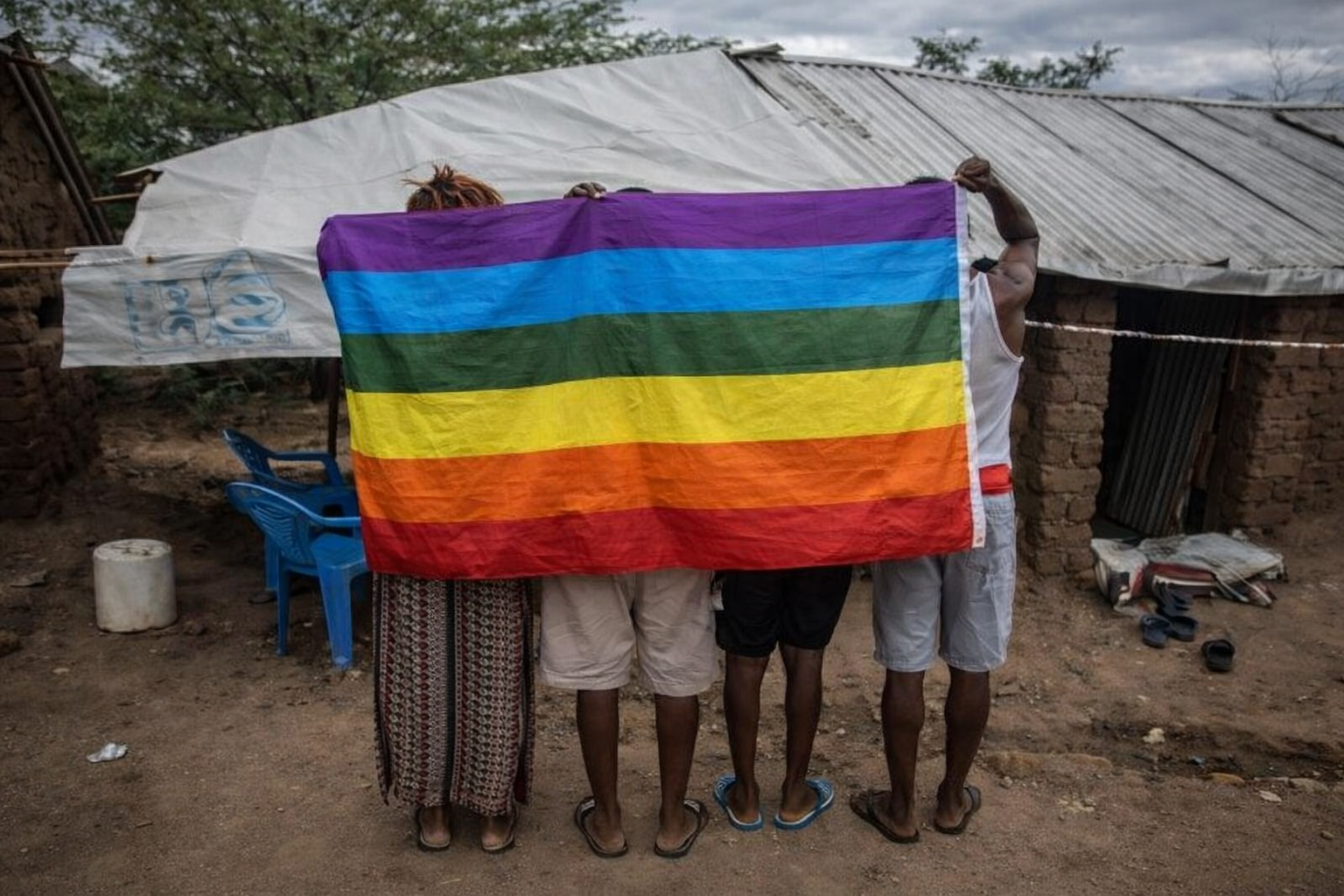
LGBTQI+ refugees face risks most of us cannot imagine: persecution by governments, the community, religious organizations, and families.
In 65 countries and territories, being LGBTQI+ is a crime. In at least seven, it is punishable by death.
For the people who manage to escape, the journey to safety is long, difficult, and often lonely. Private sponsorship groups like those organized by ROAR help bring refugees to safety and adjust to life in Nanaimo.
Explore the status of LGBTQI+ rights in the interactive map below.
What LGBTQI+ refugees go through to reach Canada.
The refugee process for people fleeing persecution based on sexual orientation or gender identity is long, uncertain, and often painful.
-
Many LGBTQI+ people in repressive countries struggle even to find the language or confidence to understand their own identity — let alone act on it.
In many countries, the words used to describe sexual and gender minority people carry deeply negative meanings. Family and social pressure to conform to heterosexual life — including marriage — can suppress self-identity for years or even a lifetime. Without positive role models or support, many people lack the confidence to identify as a sexual or gender minority person. As stigmatised objects of persecution, LGBTQI+ people may live in denial and self-loathing, experiencing shame, guilt, and fear of being outed. For many, the journey to safety begins long before they leave home — it begins with the painful process of understanding who they are.
-
Many persecuted LGBTQI+ people are not aware that they have a right to seek refuge in another country — or that a safer life is even possible.
LGBTQI+ people often suffer abuse in schools and may not complete their education, which limits access to information about their rights and options. Text-based resources — including internet sources about refugee processes — may be inaccessible, especially if they are in English. Most persecuted people are simply not aware that they can seek refuge elsewhere. It is often only when they learn that others have successfully escaped that they realise there may be hope and options available to them.
-
Leaving requires knowledge, money, a visa, and an almost unthinkable willingness to break family ties and face the unknown.
Flight to a safe country requires resources that many LGBTQI+ people do not have. Without completing school — often because of severe bullying — they may never have the financial means or skills to move. Breaking family ties is unthinkable to many, and no one readily chooses the isolation and financial insecurity of being a refugee. Some countries that persecute LGBTQI+ people are surrounded by neighbours with equally repressive regimes. If faced with an urgent need to escape, people may have no choice but to cross into another homophobic country — exchanging one form of danger for another.
-
Even after escaping, many LGBTQI+ people struggle to be recognised as refugees — and face continued persecution in the countries where they seek asylum.
If a person manages to escape their home country, they may be able to seek asylum — but many countries do not recognise refugees on the basis of sexual orientation or gender identity. Some governments resist granting refugee status, concerned about creating a "pull factor." Not everyone succeeds in convincing the UNHCR or the host country that they have a well-founded fear of persecution and that returning home is not an option. Once in a second country, a person may not be allowed to work, attend school, or obtain secure housing. Some turn to illegal labour or prostitution to survive. Continued stigmatisation and persecution in the country of asylum is common.
-
The number of resettlement opportunities has decreased while the number of LGBTQI+ refugees has grown — making private sponsorship through groups like ROAR critically important.
Some countries allow LGBTQI+ refugees to settle permanently, especially those with education and financial means. But many countries will not permit permanent settlement, forcing refugees to seek resettlement in a safe third country. The number of third-country resettlement opportunities has significantly decreased in recent years, even as the number of refugees — including LGBTQI+ refugees — has grown. This scarcity creates enormous challenges for the UNHCR and Rainbow Railroad, which must prioritise limited spots among many people with urgent needs. This is exactly why private sponsorship through organisations like ROAR is so important: it creates additional pathways to safety that would not otherwise exist. LGBTQI+ refugees selected for resettlement often cannot choose which country they go to.
-
Even after being approved, refugees may wait years for screening, interviews, and a flight — all while trying to survive in limbo.
If approved for resettlement in Canada, refugees apply and then wait for an interview with embassy staff. In a painfully long process, they are screened to ensure they meet the resettlement criteria, including medical, criminal, and security checks. Refugees may wait one year, two years, or much longer until they are accepted into Canada. During this time, they must find a way to survive — which is not easy without the right to work or stable housing. Some may also need an exit visa from the country where they are temporary residents, and in some cases, they may ultimately be denied permission to leave — even after years of waiting. At the end of the process, if all goes well, refugees are informed that a flight has been arranged.
-
Arrival in Canada is not the end of the journey — it is the beginning of rebuilding a life from scratch, often without family, language, or connections.
When resettled refugees arrive in Canada, they are given permanent resident status. They have reached safety — they are newcomers. But while many refugees can rely on family or community organisations for support, most LGBTQI+ newcomers are estranged from their families and are understandably nervous about seeking help from groups that may themselves be homophobic. They have to start their lives over. They often know no one in Canada. The vast majority speak only basic English or French. They need to find housing, get a job, and learn to navigate an unfamiliar country — from health care and transportation to weather and everyday customs. These are things most of us take for granted, but they are real, daily challenges for newcomers. ROAR volunteers work to smooth this transition: helping newcomers get on their feet, find meaningful work, and live with dignity and pride in their new home.
Every person our sponsorship groups welcome to Nanaimo represents years of hardship and courage. They deserve a community that shows up. Will you be part of it?